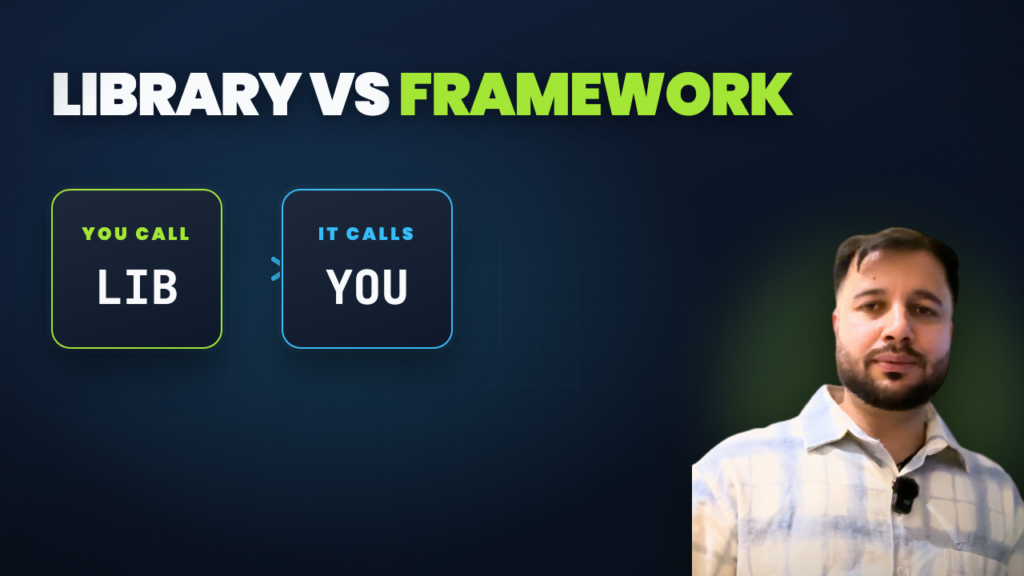
Library vs Framework: Who Is in Charge? (And What Programming Really Is)
Library vs framework, explained for beginners: programming as clear instructions, why hardware needs machine code, and who calls whom (inversion of control).
Read article →// archive
Learn programming from zero: thinking in steps, flowcharts, decisions and operators, explained in Hinglish with worked examples.
Library vs framework, explained for beginners: programming as clear instructions, why hardware needs machine code, and who calls whom (inversion of control).
Read article →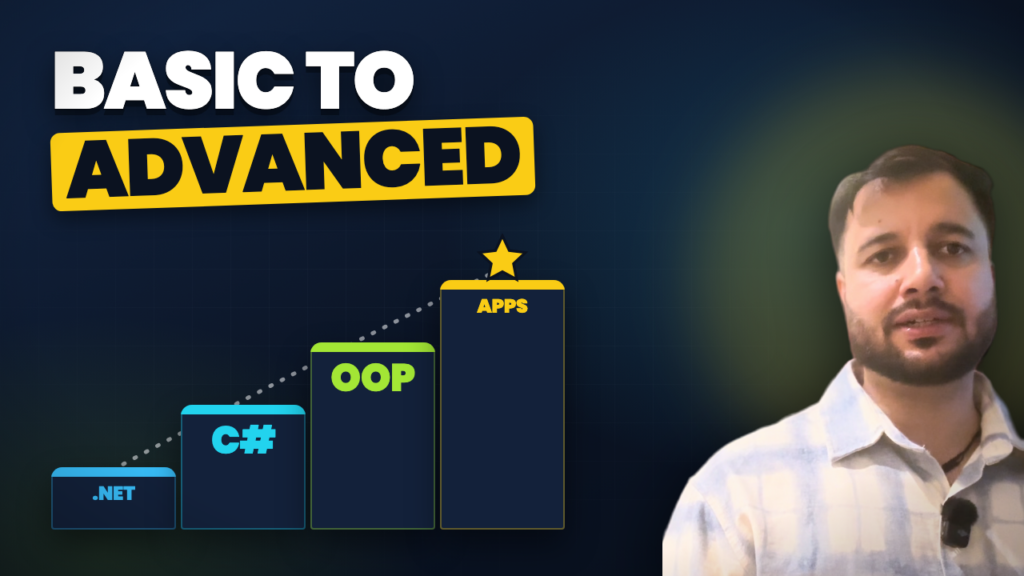
Learn C# from basics to advanced: the course roadmap. .NET fundamentals, C# programming, object-oriented C# and real console projects, step by step.
Read article →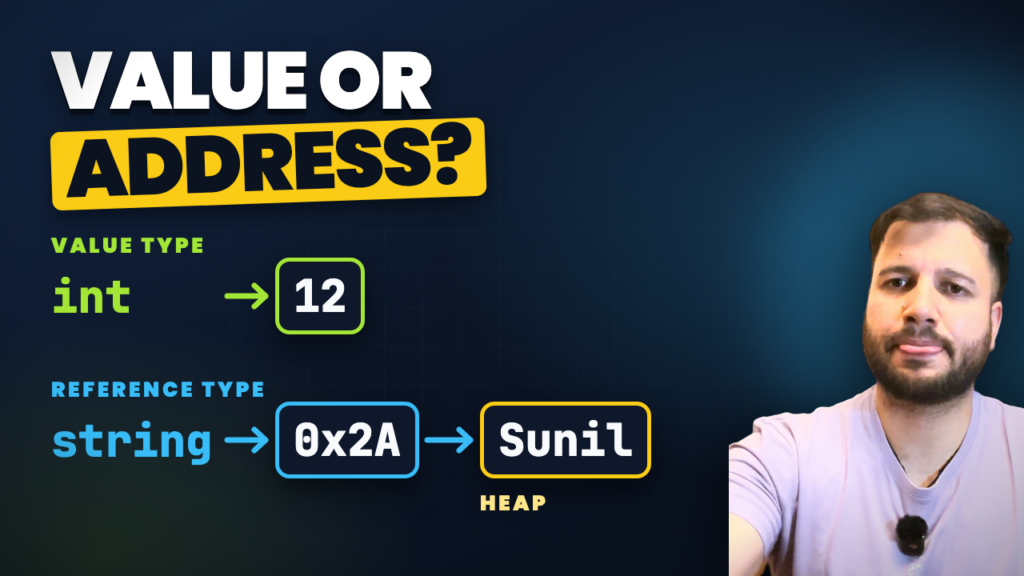
What is a variable? A named place in memory whose value can change. Learn value types vs reference types with int, string, binary 16 = 10000, stack and heap.
Read article →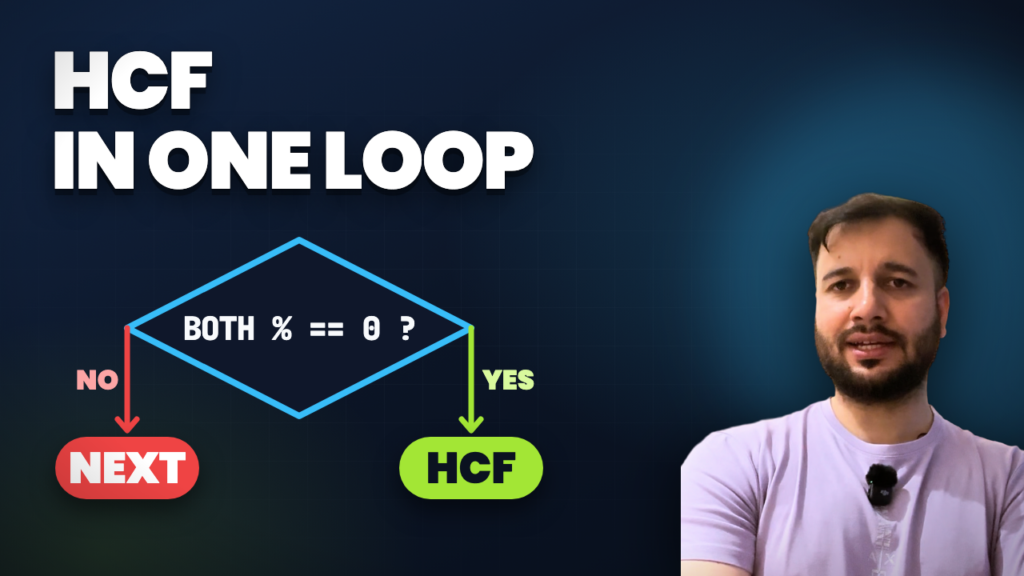
HCF and LCM of two numbers using a loop: test 1 to the smaller number with n1 % LC == 0 and n2 % LC == 0, keep the largest, then LCM = a x b / HCF.
Read article →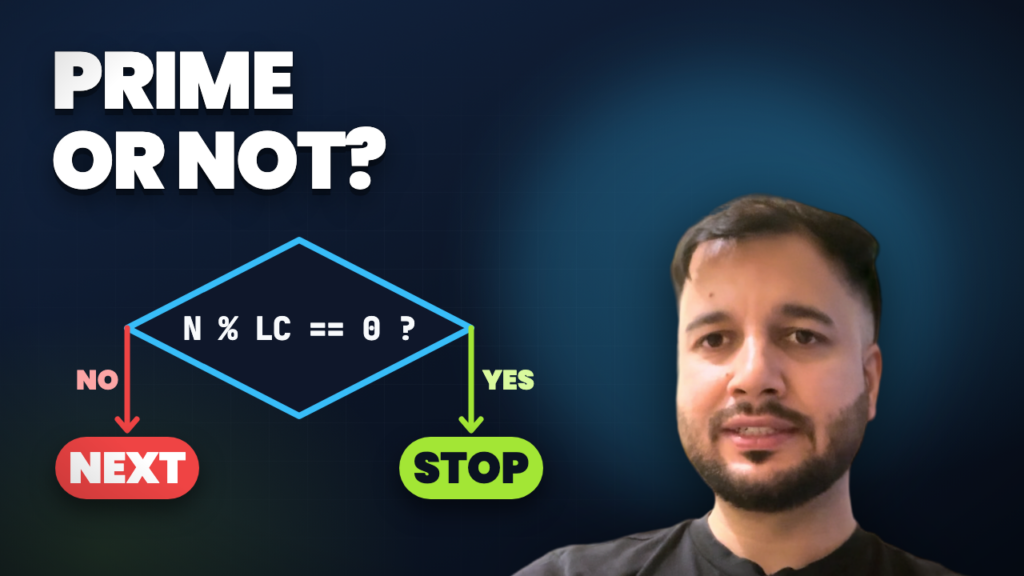
Prime number flowchart using a loop: test divisors 2 to N – 1 with number % LC == 0, keep the result in an isPrime flag, and stop early with break.
Read article →
Pyramid star pattern using nested loops: row n prints 5 – n spaces and 2n – 1 stars. Count them, write both formulas, then draw the flowchart step by step.
Read article →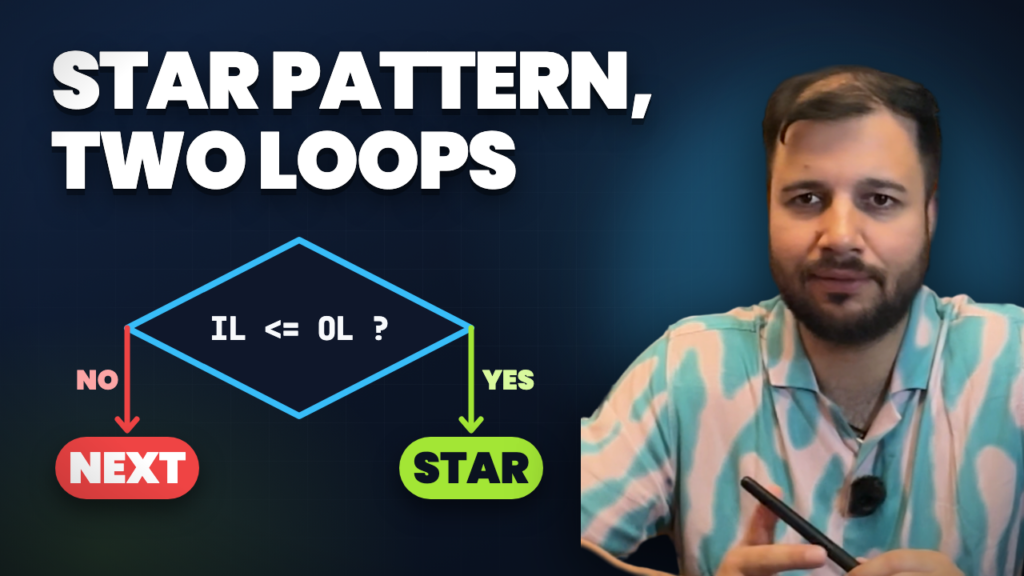
Star pattern using nested loops: the outer loop runs the rows, the inner loop prints as many stars as the row number. Flowchart and dry run, step by step.
Read article →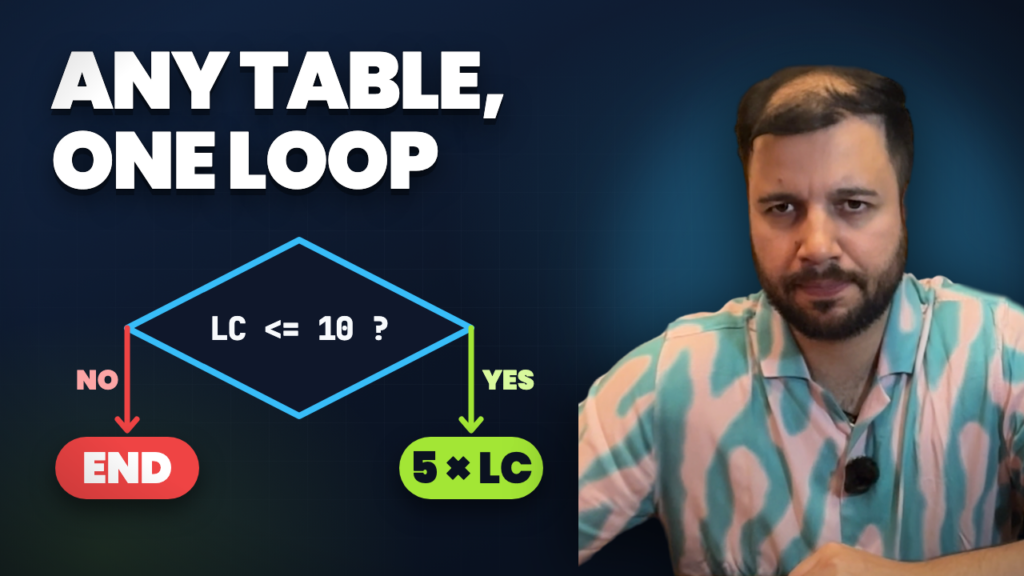
Multiplication table flowchart using a loop: the user enters any number, a loop counter runs from 1 to 10, and the flowchart prints the whole table.
Read article →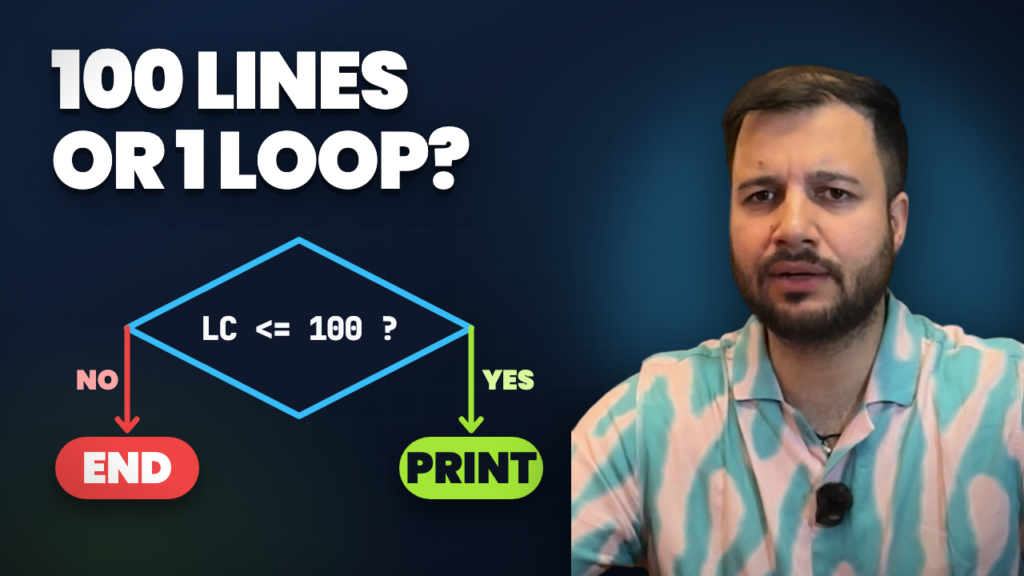
Loop in flowchart for beginners: the three parts of a loop (initialise, check, update) and a step-by-step flowchart that prints 1 to 100.
Read article →